

Simple movements can become more challenging with age. Reaching for something on a high shelf, bending down to put on shoes, turning the head while driving, or getting out of a chair may require more effort than they once did. Reduced flexibility and limited joint movement can contribute to these everyday difficulties.
Regular stretching can help older adults maintain flexibility and move more comfortably. The right stretching exercises for seniors focus on controlled movements, comfortable ranges of motion, and consistency rather than pushing the body too far. Even a few minutes of gentle stretching can become a useful part of a daily activity routine.
For seniors who need additional guidance, assisted stretching and other professional stretch services can provide another way to work on flexibility. Understanding which movements are appropriate and how to approach them safely is a good starting point.
Why Does Flexibility Matter as You Get Older?
Flexibility refers to how comfortably a joint can move through its available range of motion. As people age, changes in muscles, connective tissues, and activity levels can affect how freely they move. Spending long periods sitting or following a less active routine may also contribute to stiffness.
These changes can affect ordinary activities. Tight shoulders may make reaching overhead uncomfortable, while limited hip or leg flexibility can make bending and walking feel less natural. Maintaining flexibility can help people continue performing these movements with greater ease.
Stretching is one part of an active lifestyle that also includes strength, balance, and aerobic activity. According to the National Institute on Aging, flexibility exercises help maintain joint movement and make everyday activities, such as reaching down to tie shoes, easier to perform.
The goal isn’t to achieve the flexibility of a younger person. It’s to maintain comfortable movement, support independence, and stay involved in activities that matter.
7 Gentle Stretching Exercises for Seniors
The following movements are simple options that many older adults can explore at home. They can be performed slowly, with a sturdy chair or other appropriate support when needed.
Before starting, remember that everyone’s mobility and physical condition are different. Anyone with an existing injury, recent surgery, significant joint problems, or balance concerns should consult a healthcare professional before beginning a new stretching routine.
1. Seated Neck Stretch
Neck stiffness can make it uncomfortable to look over the shoulder, turn the head, or maintain a comfortable sitting position.
To perform this stretch, sit upright in a stable chair with both feet resting on the floor. Slowly tilt the head toward one shoulder without raising that shoulder. Stop when you feel a gentle stretch along the opposite side of the neck.
Hold the position for approximately 10–15 seconds, return to the center, and repeat on the other side. Avoid pulling the head with your hand or forcing the movement. The stretch should feel gentle rather than painful.
2. Seated Shoulder Stretch
Shoulder flexibility helps with everyday activities such as getting dressed, reaching for kitchen items, and washing your hair.
Sit comfortably with your back supported if needed. Bring one arm across your chest and use the opposite hand to support it gently above the elbow. Keep your shoulders relaxed and avoid twisting your upper body.
Hold for 10–20 seconds before releasing. Repeat with the other arm. If raising or crossing an arm causes shoulder pain, reduce the movement or skip the exercise until you receive appropriate guidance.
3. Seated Upper Back Stretch
Long periods of sitting can leave the upper back feeling tight. A gentle upper back stretch encourages comfortable movement through the shoulders and upper torso.
Sit with your feet flat on the floor and your hands resting on your thighs. Slowly reach your arms forward, allowing your upper back to round slightly while keeping your head relaxed. Avoid forcing your spine into a deep bend.
Hold the position briefly while breathing normally, then return to an upright sitting position. This movement can be particularly useful for people who spend much of the day seated.
4. Seated Hamstring Stretch
The hamstrings are the muscles along the back of the thighs. Limited flexibility in this area can make bending and some walking movements feel restricted.
Sit toward the front of a sturdy chair. Extend one leg forward with the heel resting on the floor and the knee comfortably straight. Keep your back relatively upright and gently lean forward from your hips until you feel a mild stretch behind the thigh.
Hold for 10–20 seconds, then return to the starting position. Repeat with the opposite leg. Avoid rounding the lower back excessively or reaching toward the toes.
5. Seated Ankle Stretch
Ankle movement contributes to walking, stepping, and maintaining stability. Gentle ankle exercises can help older adults maintain comfortable movement in the lower legs and feet.
Sit in a chair with both feet slightly lifted or resting comfortably on the floor. Slowly point the toes away from the body, then bring them back toward the shin. Repeat this movement several times before switching feet.
Keep the movement controlled and avoid forcing the ankle beyond its comfortable range. This is a convenient exercise to include during a break from prolonged sitting.
6. Standing Calf Stretch
The calf muscles help support walking and everyday lower-body movement. Gentle calf stretching can help maintain flexibility around the lower leg and ankle.
Stand facing a wall or sturdy countertop for support. Place one foot slightly behind the other, keeping the back heel on the floor. Bend the front knee slightly while maintaining a comfortable position in the back leg.
You should feel a gentle stretch in the calf of the back leg. Hold for approximately 15–20 seconds, then switch sides. Anyone who feels unsteady should perform this movement with appropriate assistance or choose a seated alternative.
7. Seated Torso Rotation
Turning the upper body is part of many everyday activities, including looking behind while reversing a vehicle or reaching for something beside a chair.
Sit upright with your feet flat on the floor. Place your hands comfortably on your thighs or across your chest. Slowly rotate your upper body toward one side while keeping your hips facing forward.
Pause briefly at a comfortable position, return to the center, and repeat on the other side. Keep the movement small and controlled. Avoid twisting through pain or forcing the lower back.
How Often Should Seniors Stretch?
There isn’t one stretching schedule that works for every older adult. Frequency depends on physical ability, health conditions, current activity levels, and the types of movements being performed.
A practical starting point is to include gentle flexibility exercises several times throughout the week. Some people prefer a short routine in the morning, while others find stretching more comfortable after a walk or another period of light activity.
Consistency matters more than trying to complete a long routine in one session. A few carefully performed movements can be easier to maintain than an ambitious schedule that causes discomfort or fatigue.
The CDC recommends that adults aged 65 and older include aerobic activity, muscle-strengthening exercises, and balance activities in their weekly routines. Stretching supports flexibility, but it should complement these other forms of movement rather than replace them.
How to Stretch Safely as a Senior
Stretching should feel controlled and comfortable. Older adults may have different mobility limitations, medical conditions, and previous injuries, so choosing appropriate movements is essential.
Start with a few minutes of gentle movement to warm up the muscles. Walking slowly around the room or moving the arms and legs while seated can help prepare the body.
Avoid bouncing, sudden movements, or trying to force a joint into a deeper position. Move gradually and hold each stretch without holding your breath. A mild pulling sensation is generally expected, but sharp pain, dizziness, numbness, or unusual discomfort are reasons to stop.
Support is another important consideration. A stable chair, wall, or countertop can provide additional security during standing exercises. If balance is a concern, seated alternatives may be more appropriate.
People managing osteoporosis, arthritis, recent surgery, chronic pain, or other medical conditions should ask their healthcare provider which movements are suitable. A physical therapist can also help identify exercises that match individual limitations.
Can Assisted Stretching Help Seniors Maintain Flexibility?
Home stretching provides a convenient way to work on flexibility, but some older adults may find certain movements difficult to perform independently. Limited range of motion, difficulty reaching certain body areas, or uncertainty about proper positioning can make it challenging to stretch comfortably.
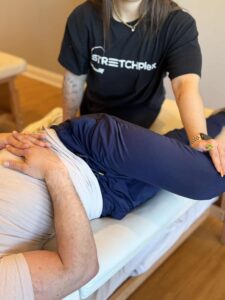
Assisted stretching offers a guided alternative. During a session, a trained stretching professional helps position and move the body through appropriate stretches while adjusting the movement to the individual’s comfort and mobility.
For seniors, this approach can be useful when they want additional guidance with areas such as the shoulders, hips, back, and legs. The professional can help manage positioning and encourage controlled movement without requiring the individual to perform every stretch independently.
However, assisted stretching isn’t a replacement for physical therapy or medical treatment. Seniors experiencing significant pain, unexplained mobility changes, or recovering from an injury should first seek advice from an appropriate healthcare professional.
What Should Seniors Look for in Professional Stretch Services?
Choosing stretch services requires more consideration than simply finding a convenient appointment. Older adults should look for an approach that respects their current physical abilities and allows movements to be adjusted when necessary.
A good starting point is understanding how the session works. Ask whether the service involves one-on-one assistance, how movements are selected, and whether the professional considers existing mobility limitations.
Comfort and communication also matter. Seniors should feel able to explain when a movement feels uncomfortable and ask for an adjustment. There should be no pressure to achieve a particular position or stretch beyond a comfortable range.
It’s also worth checking the provider’s experience, training, and scope of practice. Assisted stretching professionals are not automatically physical therapists or medical providers, so their services should be understood accordingly.
For older adults who want guided flexibility work as part of a broader wellness routine, StretchPlex offers one-on-one assisted stretching alongside personal training and other wellness services.
How StretchPlex Supports Personalized Stretching
StretchPlex provides assisted stretching sessions designed around individual movement and flexibility needs. Rather than relying entirely on independent exercises, clients receive one-on-one guidance during their stretching sessions.
For seniors interested in maintaining comfortable movement, this can offer a more guided approach to working on flexibility. Areas such as the shoulders, hips, legs, and back can receive attention based on the individual’s comfort and session goals.
StretchPlex also offers personal training and recovery-focused services. These options provide different ways to approach physical activity and wellness, depending on an individual’s needs and suitability.
Before scheduling, seniors should communicate any relevant health conditions, recent procedures, injuries, or movement restrictions. This helps establish whether assisted stretching is appropriate and what adjustments may be necessary.
Conclusion
Maintaining flexibility can make a meaningful difference in how comfortably seniors manage everyday activities. Gentle stretching exercises provide a practical way to work on shoulder, back, hip, leg, and ankle movement without requiring an intensive workout.
The most effective approach is one that matches individual abilities, prioritizes safety, and remains consistent over time. For seniors who prefer additional guidance, professional assisted stretching can offer another option alongside a balanced physical activity routine.
Frequently Asked Questions
1. What are the best stretching exercises for seniors?
Gentle neck, shoulder, upper back, hamstring, ankle, calf, and torso stretches are useful options for maintaining flexibility. The best exercises depend on individual mobility, balance, and health conditions.
2. Is stretching safe for seniors with arthritis?
Some people with arthritis can benefit from gentle movement and flexibility exercises, but the appropriate exercises depend on the affected joints and the severity of symptoms. Seniors should consult their healthcare provider about suitable movements and avoid stretches that cause pain.
3. Should seniors stretch every day?
Some older adults may comfortably include gentle stretching in their daily routine, while others may prefer several sessions per week. Frequency should depend on individual needs, comfort, and medical guidance.
4. Is assisted stretching better than stretching at home?
Neither approach is automatically better for everyone. Home stretching offers convenience and independence, while assisted stretching provides additional guidance and support. The right choice depends on personal mobility, comfort, and goals.
5. Can stretching improve mobility in older adults?
Regular flexibility exercises can help maintain or improve the range of motion available at a joint. This may make everyday movements more comfortable, although results vary depending on individual health and physical condition.