

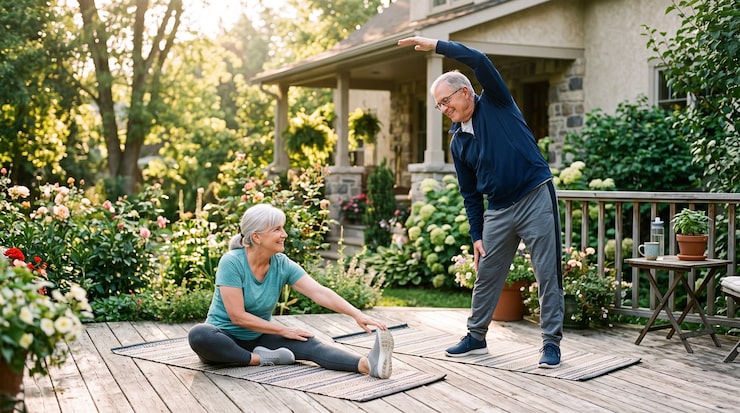
It usually starts with something small. You reach for a mug on the top shelf and your shoulder complains. You bend to tie your shoes and notice your hamstrings feel like tight rubber bands. Turning your head to check traffic takes a little more effort than it used to. None of this is dramatic, but together it can make everyday life feel harder than it should.
The good news is that stiffness isn’t a one way street. With a few minutes a day of stretching exercises for seniors, many people notice that their bodies feel looser and moving feels easier. In this guide, we’ll go through safe, gentle stretches you can do at home, explain how often to do them and look at two helpful extras: working with a trainer who understands older bodies and the growing option of assisted stretching. It’s written in plain language, for beginners, and with safety at the center.
Why Flexibility Matters More as We Age
What Changes in the Body
As we get older, muscles and tendons tend to lose some elasticity, joints may feel stiffer and we often move less than we used to. Sitting for long periods makes things worse, since hips, hamstrings and shoulders can tighten up. Less movement leads to less range of motion, and less range of motion makes us move even less.
What Stretching Can Do
Regular, gentle stretching can help maintain or improve your range of motion, ease stiffness, support better posture and make daily tasks such as dressing, reaching and getting out of a chair more comfortable. Many people also find that stretching helps them relax and sleep better. It’s important to be realistic, though. Stretching alone won’t prevent every ache or fall, which is why it works best as one part of a wider routine that includes strength and balance work.
Before You Start: Safety First
Talk to Your Doctor
If you have a medical condition such as heart disease, high blood pressure, osteoporosis, arthritis, a joint replacement, recent surgery or balance problems, check with your doctor or physiotherapist before starting a new routine. They can tell you which movements to avoid or modify.
Simple Safety Rules
Warm up first with five to ten minutes of light movement, such as walking around the house or marching in place, since stretching cold muscles is less effective and more likely to cause strain. Move slowly and smoothly, with no bouncing. Stretch only to the point of mild tension, never pain. Breathe steadily, because holding your breath tightens the body. Use a sturdy chair, a wall or a countertop for support, and wear non slip shoes or go barefoot on a non slip surface. If something feels sharp, pinching or dizzying, stop.
8 Gentle Stretching Exercises You Can Do at Home
Here are simple moves that need no equipment. Many are done seated, which makes them ideal if balance is a concern. If you’re searching for chair stretches for seniors, this is a good place to begin. Hold each stretch for around 10 to 30 seconds, and repeat two or three times.
| Stretch | How to do it | Where you should feel it |
|---|---|---|
| Neck side tilt | Sit tall, gently lower one ear toward your shoulder, then switch sides | Side of the neck |
| Shoulder rolls | Lift shoulders toward ears, roll them back and down in slow circles | Shoulders and upper back |
| Chest opener | Sit tall, clasp hands behind your back or hold a doorframe and gently open the chest | Front of shoulders and chest |
| Seated hamstring stretch | Sit on the edge of a chair, extend one leg with the heel on the floor and lean slightly forward with a straight back | Back of the thigh |
| Seated spinal twist | Sit tall, place a hand on the opposite knee and gently turn your upper body | Mid and lower back |
| Ankle circles | Lift one foot and slowly circle the ankle in both directions | Ankles and calves |
| Calf stretch at the wall | Stand facing a wall, step one foot back with the heel down and bend the front knee | Calf |
| Standing hip flexor stretch | Holding a counter, step one foot back and gently shift your hips forward | Front of the hip and thigh |
Tips for Getting More From Each Stretch
Sit or stand tall, and keep your shoulders relaxed. Exhale as you move deeper into the stretch. Don’t compare yourself with anyone else, since flexibility varies a lot from person to person. If you have osteoporosis, avoid deep forward bends and strong twisting unless your healthcare provider approves them. If you’ve had a hip replacement, ask your surgeon or physiotherapist about movements to avoid.
How Often and How Long to Stretch
When people ask how often seniors should stretch, a practical goal is at least two to three days a week, and many find that a short daily routine works even better. Ten to fifteen minutes is plenty. Consistency matters more than intensity, so a calm routine you can keep up beats an ambitious one you abandon. Many people like to stretch in the morning to loosen up, or in the evening to wind down. Just remember to warm up first, even for a gentle session.
Beyond Stretching: Strength and Balance Matter Too
Flexibility is only one piece of staying mobile. Health agencies such as the CDC recommend that older adults aim for regular aerobic activity, muscle strengthening exercises on at least two days a week and balance training. This matters because falls are a major concern as we age, with the CDC noting that more than one in four older adults falls each year.
Simple strength exercises include sit to stand repetitions from a chair, wall push ups, light resistance bands and bodyweight leg raises. For balance, try standing on one leg while holding a counter, heel to toe walking along a wall or gentle tai chi if classes are available. Search for balance exercises for seniors that can be done safely at home, and add them gradually.
Personal Training for Seniors
Why It Can Help
If you’re unsure where to begin, or you have specific health concerns, working with a trainer who understands older adults can be a great investment. A good trainer designs a plan around your goals, your medical history and your current ability, then progresses it safely. They can correct your form, keep you motivated and help you build strength and balance with confidence. For more on why this matters, this look at personal training for seniors explains how a personalized approach makes everyday life easier.
How to Choose a Trainer
When looking for a personal trainer for seniors, check qualifications first. Look for certification from a recognized organization and, ideally, additional training in older adult or special population fitness. Ask about their experience with conditions like arthritis, osteoporosis, heart disease or recovery after surgery. Make sure they ask about your medical history and are willing to coordinate with your doctor. Choose someone patient who listens, explains clearly and respects your pace. If getting to a gym is hard, ask about in home sessions, which many trainers now offer.
Questions to Ask Before You Sign Up
What certifications and insurance do you have? How do you adapt exercises for joint pain or limited mobility? What does a typical first session look like? How do you track progress? What’s your cancellation policy? Many trainers offer a trial session, which is a good way to see whether the fit feels right.
Assisted Stretching: Is It Worth It?
What It Is
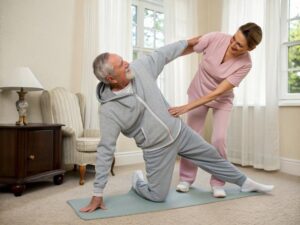
In assisted stretching, a trained practitioner guides your body through stretches, moving your limbs gently into positions you might not reach alone. Sessions often last thirty to sixty minutes. Some people love the experience, especially if they sit a lot, feel stiff or want guidance. If you want to explore options, this overview of assisted stretching coaches shows what to look for in a provider.
Possible Benefits and Limits
Assisted stretching can help you relax, increase your range of motion and learn how stretches should feel. It also takes some of the effort out, since you don’t have to hold positions yourself. On the other hand, it isn’t a cure for medical problems, benefits may fade if you don’t keep stretching on your own and quality varies between providers. People often wonder whether assisted stretching is worth it. For many, it’s a nice complement to a home routine, rather than a replacement for it.
How to Choose a Practitioner
Searching for assisted stretching near me will bring up many options, so check a few things first. Ask about training and certification. Tell the practitioner about any injuries, surgeries or medical conditions before you begin. Choose a place that explains what will happen, asks for your feedback and stops immediately if something hurts. If you have a medical condition, talk to your doctor first. Comfort is the rule. A stretch should feel like gentle pressure, never sharp pain.
A Simple Weekly Plan
A beginner friendly week might include a ten minute stretching routine on most days, two short strength sessions using chair stands and light bands, a daily walk of whatever length suits you and a few minutes of balance practice near a counter. Once a month, you might add a trainer session or an assisted stretching appointment if it suits your budget. Adjust everything to your energy and health.
Common Mistakes to Avoid
The most common mistakes include stretching cold muscles, bouncing, pushing into pain, holding your breath, doing too much too soon, skipping strength and balance work, comparing yourself with others and ignoring medical advice. Another is giving up after a few days. Flexibility changes slowly, so give yourself several weeks before judging the results.
Conclusion
Staying flexible doesn’t require expensive equipment or long workouts. A few gentle stretches each day, combined with strength and balance work, can make the small movements of daily life feel easier. If you want guidance, a qualified trainer or a skilled stretching practitioner can help you do it safely. Start slowly, listen to your body and celebrate progress, however small.
If you’d like a simple first step, sit on a sturdy chair right now and try three slow shoulder rolls and a gentle neck tilt on each side. It takes less than two minutes, and it’s a friendly way to start a habit that can support your mobility for years.
FAQs
1. What are the best stretching exercises for seniors?
Gentle, low impact stretches such as neck tilts, shoulder rolls, seated hamstring stretches, seated spinal twists, ankle circles and wall calf stretches are good choices. Move slowly, stretch to mild tension only and warm up first.
2. How often should seniors stretch?
A good goal is at least two to three days a week, and many people benefit from a short daily routine of 10 to 15 minutes. Consistency matters more than intensity.
3. Are chair stretches safe for older adults?
Seated stretches are often a safe option because they reduce balance concerns, but you should still check with your doctor if you have health conditions. Use a sturdy chair, avoid bouncing and stop if you feel sharp pain.
4. How do I choose a personal trainer for seniors?
Look for a certified trainer with experience in older adult fitness and conditions such as arthritis or osteoporosis. They should ask about your medical history, adapt exercises to your needs and explain things clearly.
5. Is assisted stretching worth it?
For many people it is a relaxing way to improve range of motion and learn how stretches should feel, especially as a complement to a home routine. It is not a replacement for medical care, so choose a trained practitioner and speak to your doctor if you have health concerns.